International trade between China and France has grown exponentially over the past decade, creating an increasing demand for reliable shipping solutions. Whether you're a small business importing electronics or a large manufacturer sourcing raw materials, understanding how to ship goods from China to France efficiently is crucial for your success. The process involves multiple considerations including shipping methods, documentation requirements, customs procedures, and cost optimization strategies that can significantly impact your bottom line and delivery timelines.
Sea freight remains the most cost-effective method to ship goods from China to France, particularly for large volumes and non-urgent shipments. Full Container Load (FCL) services offer dedicated container space for businesses with substantial cargo volumes, typically 20ft or 40ft containers. This option provides maximum security and eliminates the risk of cargo mixing with other shipments. Transit times usually range from 25-35 days depending on the departure port in China and the destination port in France, with Le Havre being the primary entry point.
Less than Container Load (LCL) services cater to smaller shipments that don't require an entire container. Your goods are consolidated with other shipments, making it an economical choice for businesses with moderate cargo volumes. While LCL shipments may take slightly longer due to consolidation and deconsolidation processes, they offer significant cost savings compared to air freight. Major Chinese ports like Shanghai, Shenzhen, and Ningbo provide regular LCL services to French destinations.
Air freight offers the fastest transit times when you need to ship goods from China to France urgently. Most air cargo reaches French airports within 3-7 days, making it ideal for time-sensitive products, perishables, or high-value items. Charles de Gaulle Airport in Paris serves as the main hub for air cargo from China, with connections to other French cities. While significantly more expensive than sea freight, air cargo provides excellent security and reduces inventory holding costs.
Express air services through major carriers provide door-to-door delivery with comprehensive tracking capabilities. These services often include customs clearance assistance and last-mile delivery, streamlining the entire shipping process. For businesses dealing with samples, prototypes, or urgent spare parts, express air freight ensures minimal disruption to operations and customer satisfaction.
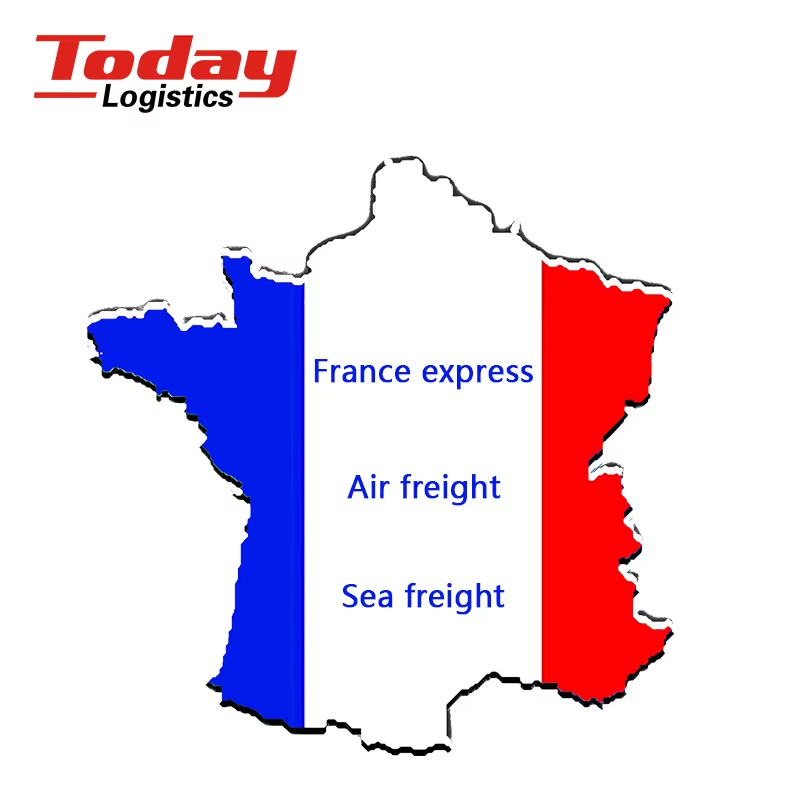
Proper documentation is fundamental when you ship goods from China to France, as incomplete or incorrect paperwork can result in costly delays and penalties. The commercial invoice must accurately describe your goods, including detailed product descriptions, quantities, unit values, and total shipment value. This document serves as the foundation for customs valuation and duty calculations. Packing lists should complement the commercial invoice by providing detailed information about packaging, dimensions, and weights.
Bills of Lading for sea freight or Air Waybills for air cargo serve as contracts of carriage and proof of shipment. These documents establish the legal relationship between shipper, carrier, and consignee. Certificate of Origin may be required for certain products to qualify for preferential duty rates under trade agreements between China and the European Union. Additionally, specific products may require special certifications, licenses, or permits depending on their nature and intended use.
French customs authorities require advance electronic submission of cargo information before goods arrive. The Entry Summary Declaration (ENS) must be filed within specific timeframes - 24 hours before loading for sea freight and 4 hours before arrival for air freight. This pre-arrival notification allows customs to conduct risk assessments and expedite clearance processes for compliant shipments.
Import duties and taxes are calculated based on the customs value, which typically includes the product cost, insurance, and freight charges. France applies the European Union's Common External Tariff, and rates vary significantly depending on product classification under the Harmonized System codes. Value Added Tax (VAT) is also applicable to most imports, with standard rates and reduced rates for specific product categories. Working with experienced customs brokers can help navigate these complex requirements efficiently.
Securing competitive rates is essential to maintain profitability when you regularly ship goods from China to France. Building long-term relationships with freight forwarders and shipping lines can lead to volume discounts and preferential treatment. Consolidating multiple shipments or coordinating with other businesses can help achieve better LCL rates through increased volume commitments. Seasonal fluctuations significantly affect freight rates, with peak periods around Chinese New Year and before European holiday seasons typically commanding premium prices.
Flexible shipping schedules can unlock substantial savings, as forwarders often offer reduced rates for cargo that can accommodate longer transit times or alternative routing. Regular rate reviews and competitive bidding processes ensure you're receiving market-appropriate pricing. Additionally, understanding fuel surcharge mechanisms and currency fluctuations helps predict total shipping costs more accurately for budgeting purposes.
Efficient packaging directly impacts shipping costs by maximizing container utilization and reducing dimensional weight charges for air freight. Custom packaging solutions that optimize space while maintaining product protection can significantly reduce per-unit shipping costs. Professional load planning services ensure containers are loaded to maximum capacity while maintaining cargo safety and compliance with weight restrictions.
Palletization strategies appropriate for European handling equipment improve efficiency at destination terminals and reduce handling costs. Standardizing package dimensions across product lines enables better container loading patterns and reduces packaging inventory requirements. Investment in quality packaging materials may seem costly initially but prevents damage claims and associated replacement costs, insurance claims, and customer dissatisfaction.
Comprehensive cargo insurance protects your investment when you ship goods from China to France, covering risks including theft, damage, and general average contributions. Marine cargo insurance policies typically offer different levels of coverage, from basic named perils to comprehensive all-risk protection. Understanding policy exclusions and ensuring adequate coverage limits based on cargo value is crucial for effective risk management.
Transit insurance should cover the entire journey from pickup in China to delivery in France, including inland transportation, port handling, and ocean or air transit. Some policies extend coverage to include storage periods and customs examination processes. Regular policy reviews ensure coverage remains adequate as business volumes and cargo values change over time.
Diversifying shipping routes and service providers reduces dependency on single points of failure in your supply chain. Maintaining relationships with multiple freight forwarders and carriers provides alternatives when disruptions occur. Regular communication with suppliers and logistics partners enables proactive problem-solving and contingency planning for potential delays or complications.
Real-time tracking systems provide visibility throughout the shipping process, enabling quick responses to unexpected situations. Advanced tracking solutions integrate with enterprise resource planning systems, providing automated updates on shipment status and enabling better inventory management. Building buffer time into delivery schedules accommodates normal transit variations and unexpected delays without impacting customer commitments.
Modern shipping platforms streamline documentation processes through digital solutions that reduce paperwork, minimize errors, and accelerate processing times. Electronic Bills of Lading are gaining acceptance among major carriers, providing faster document transmission and reduced administrative costs. Cloud-based document management systems enable real-time collaboration between shippers, forwarders, and customs brokers, improving communication and reducing delays.
Automated compliance checking systems help ensure all required documents are complete and accurate before shipment, reducing the risk of customs delays. Integration with enterprise systems eliminates manual data entry and reduces human errors in documentation. These digital solutions also provide audit trails for regulatory compliance and quality management purposes.
Advanced tracking and monitoring systems provide unprecedented visibility into cargo movement and conditions throughout the shipping process. IoT sensors can monitor temperature, humidity, shock, and location for sensitive cargo, ensuring product quality and enabling proactive intervention when necessary. These technologies are particularly valuable for electronics, pharmaceuticals, and other high-value or sensitive products.
Predictive analytics tools analyze historical shipping data to identify patterns and optimize future shipments. These systems can recommend optimal routing, predict potential delays, and suggest alternative solutions based on real-time conditions. Machine learning algorithms continuously improve predictions as more data becomes available, enhancing decision-making capabilities for logistics managers.
Choosing the right freight forwarder is crucial for successfully managing shipments from China to France. Look for providers with established offices or reliable agents in both countries, ensuring local expertise and support throughout the shipping process. ship goods from China to France services require deep understanding of both Chinese export procedures and French import requirements.
Evaluate potential forwarders based on their technology capabilities, customer service quality, and track record with similar shipments. Request references from other businesses in your industry and verify their credentials with relevant trade associations. Financial stability of your forwarder is also important, as they handle significant sums on your behalf and their failure could disrupt your supply chain.
Professional customs brokers provide invaluable expertise in navigating complex import regulations and ensuring compliance with all requirements. They stay current with changing regulations, trade agreements, and duty rates that affect your shipments. Experienced brokers can often identify duty optimization opportunities through proper classification, origin determination, and utilization of preferential trade programs.
Quality customs brokerage services include proactive communication about regulatory changes, advance preparation of import documentation, and rapid response to customs queries or examinations. Many brokers offer value-added services such as duty payment financing, bonded storage facilities, and distribution services that can further streamline your import operations.
Sea freight typically takes 25-35 days from major Chinese ports to French destinations, while air freight usually requires 3-7 days. Transit times can vary based on specific ports, seasonal factors, customs clearance efficiency, and chosen service levels. Express services may offer faster delivery but at premium rates.
Essential documents include commercial invoice, packing list, bill of lading or air waybill, certificate of origin, and any product-specific certifications or licenses. Additional documents may be required depending on the nature of your goods, such as CE marking certificates for electronics or sanitary certificates for food products.
Import duties are calculated based on the customs value using EU Common External Tariff rates specific to your product classification. VAT is also applied to most imports. Duties typically range from 0-25% depending on the product, while standard VAT rate is 20% in France. Some products may qualify for preferential rates under EU-China trade agreements.
Sea freight LCL is usually most cost-effective for regular small to medium shipments, while FCL becomes more economical for larger volumes. The choice depends on your cargo volume, urgency requirements, and total logistics costs including inventory carrying costs. Regular analysis of your shipping patterns helps determine the optimal mix of shipping methods.

 EN
EN


 Hot News